
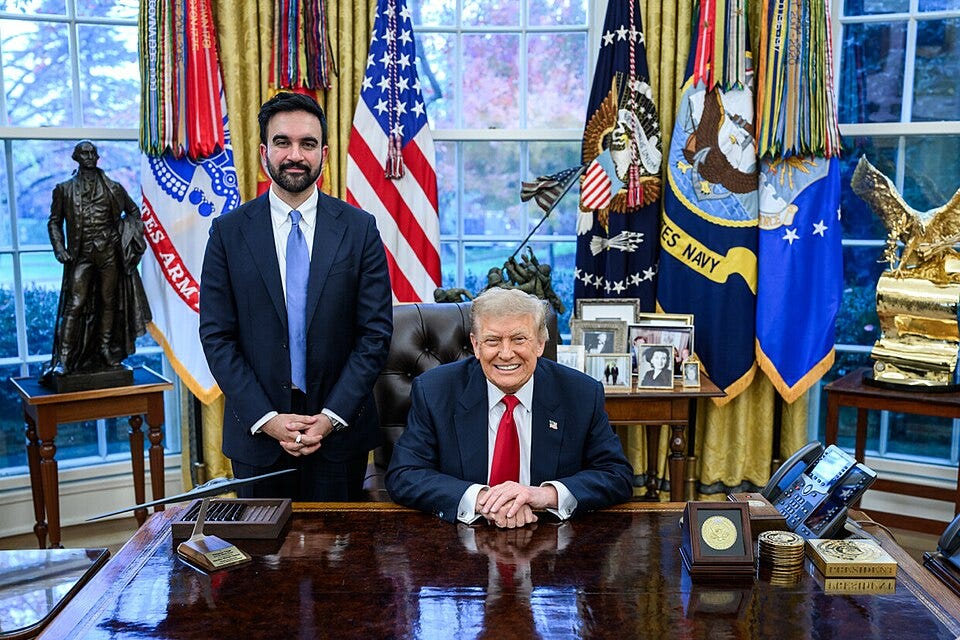
Bad news for Trump, who is hailing the New York primary results as proof that Democrats are embracing communism — a label he routinely applies to policies that ask the wealthy and powerful to pay more or expand the role of government. Bad news as well for much of the mainstream media, which is eager to portray these outcomes as merely another left-versus-right battle within the Democratic Party. And especially bad news for the corporatist wing of the Democratic Party: large majorities of American voters support many of the policies commonly associated with democratic socialism.
Candidates such as Zohran Mamdani, along with Claire Valdez, Darializa Avila Chevalier, and Brad Lander, prevailed because they embraced a populist economic agenda that speaks directly to the concerns of working people. Their victories reflect growing support for policies that address the economic challenges Americans face every day.
Public polling over the past year helps explain why these candidates are finding success. Seventy-six percent of voters identify the cost of living as their biggest economic concern. Sixty-six percent support guaranteeing health care for all. Seventy-eight percent believe housing is a fundamental human right, and 74% support government investment in building and subsidizing homes for low-income families. Sixty-nine percent say the cost of prescription drugs is a major concern.
The same pattern appears on workplace issues. Sixty-eight percent of Americans approve of labor unions, 66% believe it should be easier for workers to join a union, and 77% support policies that strengthen workers’ bargaining power.
The public is equally clear about the role of money in politics. Seventy-three percent of American voters want to reduce the influence of billionaires on the political process. Seventy-two percent support strict limits on campaign spending by individuals and organizations, and eight in 10 believe political donors, lobbyists, and special interests wield too much influence in government. Sixty-five percent support raising taxes on corporations and billionaires to ensure they pay their fair share.
Far from being politically fringe, the positions championed by these candidates align with the views of broad majorities of the American public—not only Democrats, but Independents and, on many of these issues, significant numbers of Republicans as well.
This is not simply a battle between the political left and right. It is increasingly a battle over class and economic power. For years, Trump and the MAGA movement have appealed to working-class voters by channeling frustration with political and economic elites. But many of those voters are beginning to ask a more fundamental question: Am I better off? For millions struggling with the high cost of housing, health care, groceries, childcare, and prescription drugs, the answer is increasingly no.
The Democratic candidates generating the most enthusiasm today—many of them proudly identifying as democratic socialists—are speaking directly to those economic concerns. They are offering an agenda focused on lowering costs, strengthening workers’ rights, expanding affordable housing, and reducing the influence of corporate power. Democrats as a whole would be wise to recognize the appeal of that message.
The party’s corporate wing remains closely aligned with Wall Street, corporate PACs, pharmaceutical companies, the health insurance industry, Big Tech, and AIPAC. Yet many voters increasingly view those relationships as evidence that too many elected officials are more responsive to powerful interests than to ordinary Americans.
Candidates who reject corporate PAC money are drawing a sharp contrast. Rather than relying on corporate political action committees, DSA-backed candidates have generally pledged to finance their campaigns through small-dollar donations and grassroots organizing. At a time when overwhelming majorities of Americans believe wealthy donors and special interests have too much influence over government, refusing corporate PAC money reinforces the message that these candidates are accountable to working people rather than corporate donors.
These candidates have also begun addressing another issue that many elected officials have largely ignored: the rapid expansion of artificial intelligence and the data center infrastructure needed to support it. DSA candidates have called for slowing the unchecked growth of data centers, arguing that communities should not bear the environmental and economic costs solely to maximize corporate profits. Organized labor has likewise pushed for stronger safeguards, with the AFL-CIO advocating policies to ensure AI enhances workers’ lives rather than displacing them.
These concerns resonate with the public. A majority of Americans believe the risks posed by emerging technologies may outweigh the benefits. Large majorities of working-class voters worry that AI will eliminate jobs, and many believe it could directly affect their own employment or that of someone in their family. Significant numbers also oppose the construction of large data centers near their communities. If Democrats hope to avoid AI becoming the next NAFTA in the minds of working Americans, they will need to demonstrate that technological progress can be managed in a way that protects workers, communities, and the public interest—not just corporate profits.
The lesson from New York is larger than any single election. Voters are not demanding ideological purity—they are demanding politicians who will fight for them instead of the billionaires, corporations, and special interests that have dominated American politics for far too long. Whether these ideas are labeled progressive, populist, or democratic socialist matters far less than whether they improve people’s lives.
Candidates who focus relentlessly on lowering costs, raising wages, expanding health care and affordable housing, protecting workers, and getting big money out of politics are speaking to the concerns of a broad majority of Americans. If Democrats want to build a durable governing majority and defeat Trumpism, they should stop running away from that agenda and start embracing it.
