
I saw this article in WaPo the other day, and it brought to mind an important subject I’d like to address: How should Democratic candidates in red and purple places talk about the Democratic Party given how tarnished its brand is right now?
Some candidates have gotten around this problem by quite literally walking away from the party label. Dan Osborn in Nebraska, Brian Bengs in South Dakota, and Bill Hill in Alaska are running in red states as Independents. (There are some other Indy candidates around the country as well, but these three seem like they have the best chances to win.) In a year where Kamala Harris lost Nebraska by over 20 points, Osborn only lost by six, and he is currently tied in this year’s Senate race. Bengs and Hill are tied in the polling in their races as well. If any of those guys win their races, you will probably see a lot more Independent candidates running in red states in 2028.
But in the American electoral system of two dominant parties, there are big challenges to running as an Independent. Most center or left-of-center candidates, even in red states, chose to run as Democrats. So how should Democratic candidates in tough states and districts talk about the Democratic Party?
I am not one of those Democrats who think candidates should just fly their Democratic flag with pride and not worry about the brand. A candidate’s job is to win their district/state, not defend the brand of the Democratic Party, and voters right now have a ton of cynicism about our party. If you are from a red or lean-red place, you need to show that you are independent enough to criticize Democrats.
But what I would advocate is that Democratic campaigns make those criticisms in a way that doesn’t attack the whole party, worsening our brand and depressing Democratic turnout.
One example is the first from the WP article: Roy Cooper saying that “he bucked his party to oppose defunding the police.” I have long been on record saying that I thought “defund the police” was one of the most politically tone deaf slogans of all time, so yeah, Gov. Cooper, criticize that policy all you want. But to say you “bucked your party” in opposing it is just wrong: I doubt that there were even 5% of Democratic candidates or elected officials nationwide that ever said they supported anything resembling defunding the police. It was a slogan thrown out there by a few lefty activists, not by very many Democratic office holders or candidates. Suggesting that most or all of the rest of the party was for defunding the police hurts the entire party from top to bottom.
How about saying something like: “Some national Democrats said they wanted to defund the police. I said no, and led the North Carolina Democratic Party in rejecting that idea.” That way, he helps not only himself but other Democrats who are running in the state.
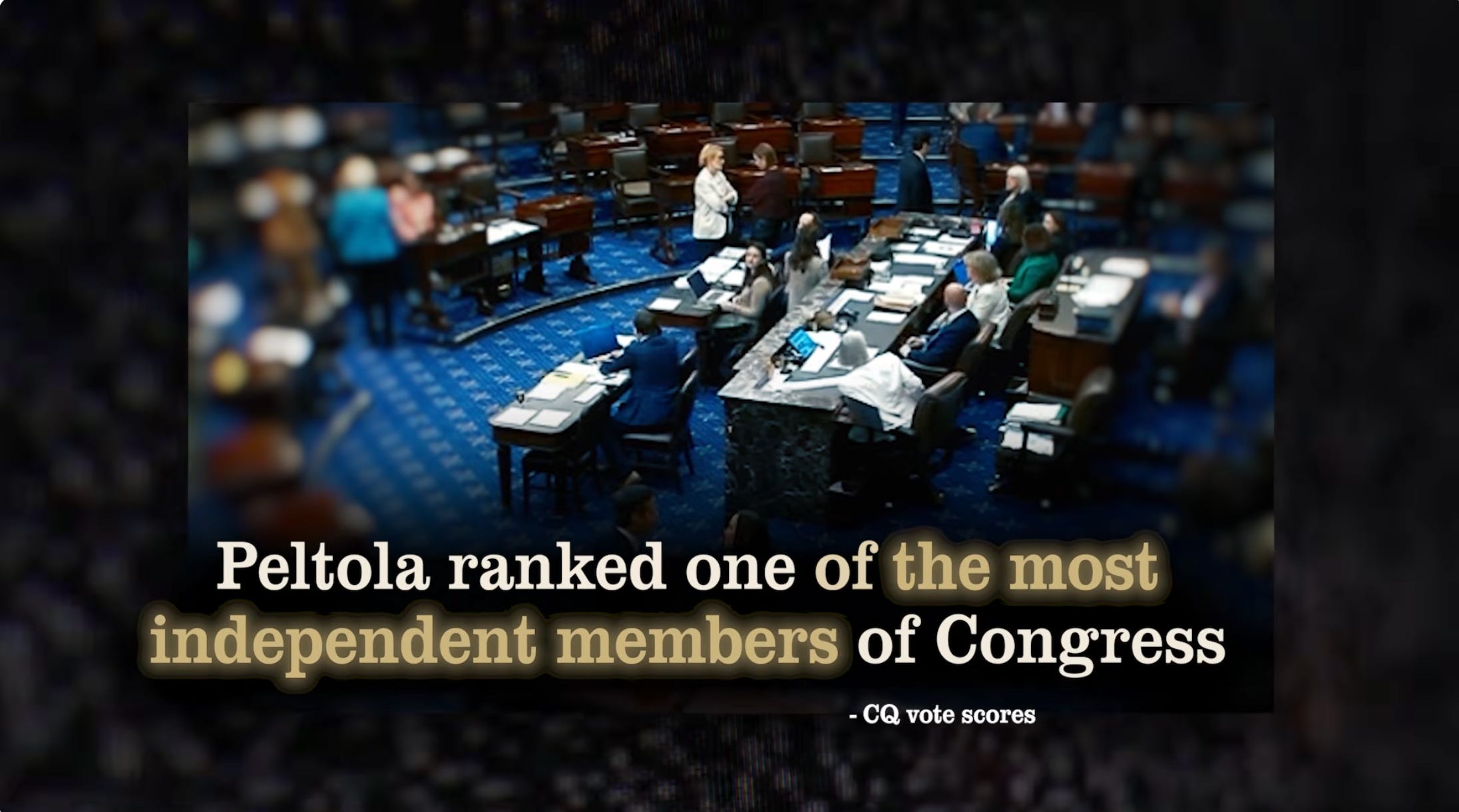
Mary Peltola has the smarter approach: “I’ll take on anyone, including Democrats… who doesn’t understand what Alaska needs.” It acknowledges that there are Democrats nationally who don’t get how Alaska works, but the ad doesn’t denigrate the entire party.
The approach Iowa Senate candidate Josh Turek takes doesn’t criticize the party, but just talks about how bipartisan he is. This is not harmful to any other Democrats, but I have my doubts on how many votes it will get Josh. Everyone says they like bipartisanship in general, but it is an insider process word that doesn’t mean much to regular people. Voters want to know whether you fought to get prices down, created jobs in the area, kept their hospital from closing, not whether you were bipartisan on some generic pieces of legislation they don’t know anything about.
Here’s another suggestion: I have no problem taking issue with some of the more extreme slogans of what some people are calling Woke 1.0 social issues. However, economic issues are the most persuasive with working-class voters. I would call out Democrats who supported bad trade deals like NAFTA (which working-class voters in focus groups still bring up as a terrible idea), or who bailed out Wall Street in the financial crisis. Mentioning issues like that will matter more to voters who are hungry to know what Democrats will and won’t support on economic issues.
Having the debate over what the Democratic Party should be at the right time
We have seen a vigorous debate in Democratic primaries this year over where the party should go related to corporate power, Medicare for All, what to do about AI and data centers, policies toward Israel, and many other important issues. We are going to have that debate, robustly, after this election is over, as a score of potential presidential candidates position themselves and make their case as to why their agenda and message are the right ones for Democrats to embrace. I look forward to that debate, and certainly plan to be a part of it.
But right now, with early voting starting up just a few days from now in North Carolina and other states to quickly follow, it is time to focus like a laser beam on turning out Democratic voters, persuading the persuadables, and racking up as many Democratic wins as we possibly can. If we net four Senate seats, we can stop any more right-wing judicial nominations or cabinet officials from being confirmed. If we net four House or Senate seats, we can stop any more terrible budget bills from being rammed down our throats.
Our democracy is on the line, and this election is our opportunity to turn the tide against Trump’s awful version of fascism. Now is not the time to attack each other and throw out goofy rhetoric. And I’m talking to everyone here. Any progressives out there still talking trash to Democrats who have already lost their primary races for taking too much Big Tech and AIPAC money, you can focus on that after Election Day, don’t keep hammering away right now.
As for the Third Way and pro-Israel folks who are loudly whining about Democratic Socialists and Hasan Piker, just stop until after Election Day. Seriously: Democrats who are obsessing about the shitty things some goofy influencer who supports El-Sayed once said are just helping the Republicans right now.
I don’t like some of the shit Piker says either, and not just about Israel. But I guarantee you that Mike Rogers is supported by plenty of sexist, racist, antisemitic assholes, and I don’t hear anybody talking about that. To wit, there is a Christian Nationalist billionaire funding Rogers’ super PAC who reportedly told the former Jewish Texas House Speaker that “only Christians should hold leadership positions” in that body. Now that is some blatant antisemitism that deserves to be denounced.
Left-of-center folks are not going to get everything they want if Democrats win control of Congress, not even close for the next two years. But Democrats winning majorities and chairmanships mean so many more things are possible, and so many more things can be stopped. We need the Senate to block new right-wing judges and cabinet officials from being confirmed, and we need both houses to win the budget fights we need to have. Now is the time to unify.
After the election, hopefully we can celebrate our big wins and take a breath, and then we go to the mats on the 2028 debate. For those of us who like a good fight, that will be fun. But between now and Election Day, our fight is with the Republicans, not each other.
Excellent as always. One thing I've been wondering is whether it would be useful for prominent people from the different wings of the party to help campaign in key races where someone from the other wing (or perceived as from the other wing) is the nominee.
So in Michigan, Obama campaigning would be really helpful--well, he'd be helpful in any key race, and I think has a moral responsibility to do that in as many races as possible. But if there were others from the "moderate wing" that could help--although that's happening with Haley Stevens, Mallory McMorrow, and Gretchen Whitmire.
Conversely, in Wisconsin, where David Crowley is perceived as from the moderate wing, and Hong voters are the ones at risk of staying home, it seems like visits from Bernie and/or AOC could really help. And similarly in other states--so the idea would be each wing helping the other, and making clear that the priority, as you say, is defeating the Republicans.