
Every state is important, red state races very much included. But we would argue that Ohio is the most important state in the country in the 2026 cycle. If Democrats are able to take advantage of the extraordinary weakness of Donald Trump and the Republican Party, begin to overcome the weakness of their brand with working class voters, and begin to build a movement that can finally and fully fight back against the Epstein Class, Ohio will be the center of the story.
That’s not just because of Sherrod Brown’s run for the Senate, although you could make a damn good argument (as we do below) that this will be the most important single election of the year. But it is also clear the Governor’s race is the most important Governor’s race of the year because of its centrality to the future of public sector collective bargaining in one of the labor movement’s biggest states member-wise. And the five congressional races at play will go a long way to determining who controls the House in 2027-8.
Beyond 2026, Democrats have to start focusing now on how to expand the Electoral College map. If we had managed to pull off squeaker wins in PA, MI, and WI in 2024, we would have won the Electoral College with 270 votes, not a single vote to spare. Given that those three states are always close, and especially given that in the 2030 census Democratic and purple states will be losing more electoral votes, we desperately need to compete in more states. Obviously, the sunbelt purple states that Biden won in 2020 — GA, NV, and AZ — are states we should compete, as well as NC, where he came close. There are certainly demographic arguments for a long-term strategy for competing in TX and FL. But Ohio and its smaller Midwestern sibling Iowa were much more amenable for Democrats for the four decades leading up to the Trump years, and if Democrats return to our working class roots, they could become purple again.
At 17 electoral votes, Ohio provides us far more options in terms of electoral math.
But Ohio is only going to become purple again if we start making significant investments of time and money there now. Here are the reasons we think that investment is one of the best Democrats can make in 2026.
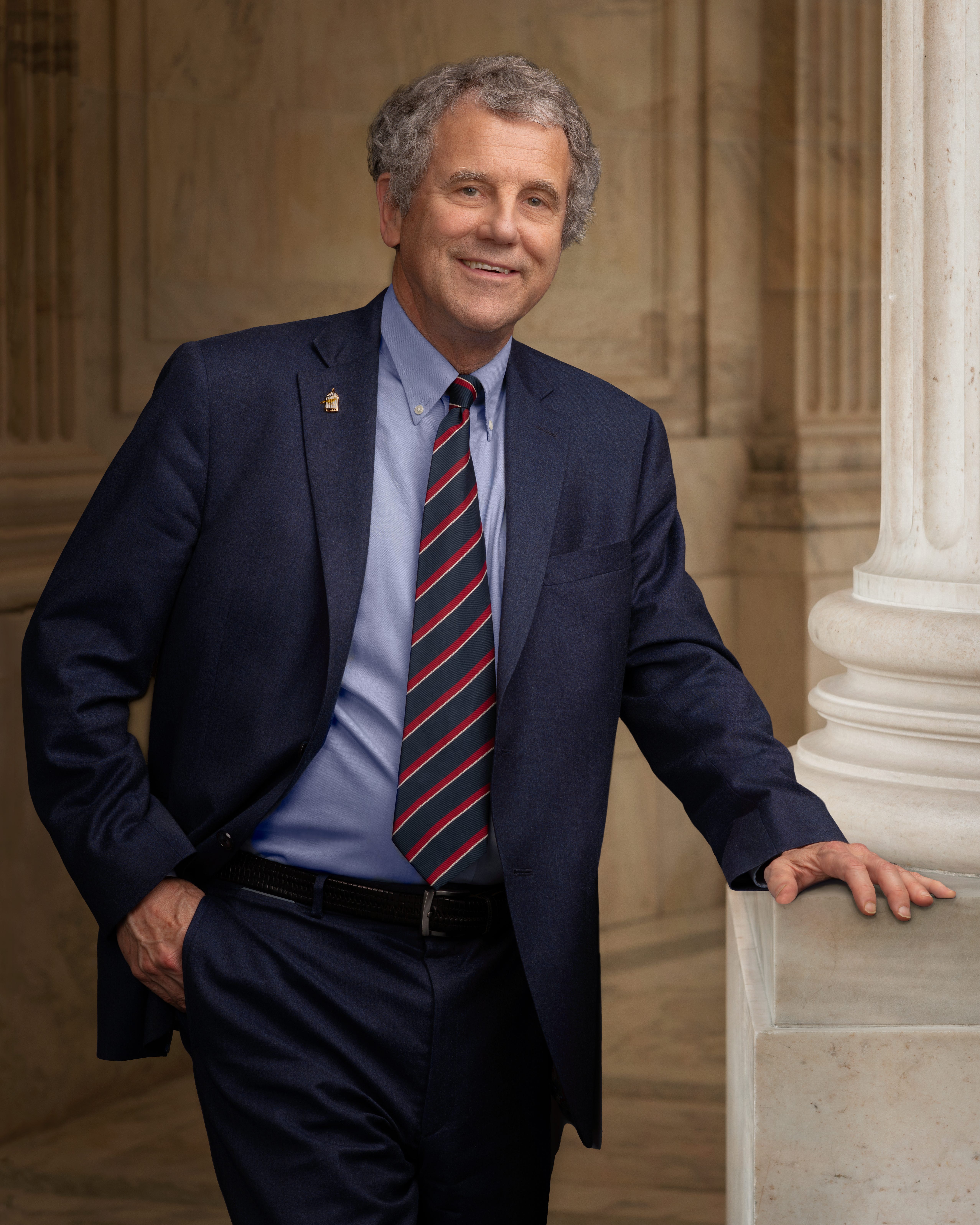
Why is the Ohio Senate election the most important race in the country this year?
That is a pretty bold statement – there are lots of big races out there. But we make this argument for two reasons, and we are going to use the bridge analogy for both of these reasons.
The first is that Sherrod Brown winning this seat is our bridge to having a real shot at retaking the Senate.
Let’s say for a moment that this cycle continues to be favorable to the Democrats. Winning the Senate is still a high mountain to climb, but in a Democratic year, it becomes possible. Let’s assume for a moment that it is a Democratic enough election to get all the seats we hold back in Democratic hands. In that kind of a year, it is likely that we also pick up the open seat in North Carolina, with a popular former Governor running. Let’s assume as well that Maine is Democratic enough in a Democratic year that we can overcome the tough primary we are going through up there. (Side note to the Dems in Maine: the point here is to win the Senate seat, not beat each other bloody enough to just win the primary.) That gives us two seats we are well positioned in.
Beyond those two, every other state where we have a chance in is a red state, most of them very red: Iowa, Nebraska, Alaska, Mississippi, Florida, Texas, maybe even Arkansas. In every one of these states, we have a good candidate and interesting dynamics, but these are really, really tough states. In a blue tsunami of a year, we could win a few of them. In a pretty good Democratic year, we might be lucky enough to win one or two. And that’s where the bridge comes in.
Sherrod Brown is the one Senate candidate running in a tough state who is well-known with a long track record as a statewide elected official with a positive brand. He has a long-term field organization built around the state and fundraising connections both inside and out of the state.
If Sherrod wins this race, and we are doing well enough overall to win those other close states we mentioned earlier, we only have to win one of that sizable list of red states with good candidates. That seems possible.
Here’s the other bridge: Sherrod is the bridge to a tougher, more populist, more fighting-for-working-people Democratic caucus in the Senate. Sherrod is the pro-labor, tough on Wall Street and Big Tech, anti-corporate abuse of power Democrat who has the respect of both wings of the Democratic caucus. When Democrats from blue states say we should be more populist, they are more easily written as lefties from lefty states. When Sherrod says it – after representing working class, red leaning Ohio for so long – other Democrats listen. He is a bridge to a better, more working class oriented Democratic caucus in the Senate.
In the four Senate races Sherrod Brown has run over the last 20 years, he has consistently out performed national Democratic number because of the populist fighter for the working class brand he built. He has successfully aligned himself with the core economic identity of the state: a pro-labor, pro-dignity of work, anti-corporate concentration of power politician. While he couldn’t overcome the disintegration of the national Democratic brand on the economy in 2024, he has shown it is possible to compete in Ohio with that kind of message and brand.
One final note on the Senate: Ohio will be home to two more Senate races in 2028 and 2030. If we can bring Ohio back so that we are competing in these races, we could pick up not only one but two Senate seats.
House races
Gerrymandering, in both state legislative and congressional districts, has made Ohio look more Republican than it actually is. The new congressional map which the Republicans just passed makes things even tougher, but as in Texas might turn out to backfire if this turns out to be a solid Democratic year.
Ohio is one of only four states which will likely have at least six House seats up for grabs this year, and the only one with both a competitive Senate and Gubernatorial race.
The Republicans in the Ohio legislature redistricted to make Democratic House members Marcy Kaptur’s and Greg Landsman’s districts tougher, so both are a little more Republican than they were. The good news is that these two are very good candidates who fit their districts to a tee: Landsman is the perfect kind of suburban nice guy for his Cincinnati suburbs district, while Kaptur is an old school working class Ohio populist for her old school working class populist Ohio district.
Emilia Sykes’ very competitive district is, if anything, a little more Democratic than it was. It will still likely be a close race.
Meanwhile, there are three districts we have the chance to take back from the Republicans in Ohio.
In Ohio 7, a working class Northeast Ohio district, the Republican incumbent barely won last time. We have a great opportunity there this time around.
In Ohio 10, Kristina Knickerbocker is running in a southwestern Ohio lean Republican district against incumbent Mike Turner. She is a strong candidate with deep roots in the district, and currently leads Turner by two points in public polling just out.
The Republican maneuvering made Ohio 15 a little more Democratic, adding some Democratic leaning Columbus suburban turf to the mix. The Democratic candidate is Adam Miller. In 2024’s Republican year in Ohio, Miller lost the district 56-44. In a better Democratic year with a better district, this one is a live round.
If we do well in the Senate and Governor’s races, we have a real shot at keeping all three of the seats we have and picking up two more.
The Governor race
The public polling since September of last year has basically been a dead heat – a couple showing Democrat Amy Acton ahead by 8-10, a couple showing Republican Vivek Ramaswamy up by that much, everything else showing a statistical dead heat.
Ramaswamy is showing the same lack of grace on the campaign trail in Ohio as he did in his presidential race, saying one dumb thing after another, while Acton has proven to be an adept candidate even though she has never run for office before.
She served as the current Republican Governor’s head of the Department of Public Health during the covid crisis, which gives her a bipartisan aspect in a state with a lot of moderate Republicans.
The toughest thing about this race is that Ramaswamy is a billionaire with a lot of billionaire friends, so he will have unlimited money. Ohio voters will be inundated with anti-Acton ads and social media. But if Acton can raise the money this is a very winnable race.
Here’s the thing: the DSCC and Sherrod’s longtime network of donors and raisers will be able to raise a lot of money for his campaign, but national donors and organizations need to get over their mentality that Ohio is too tough a state to win in the Governor’s race. If Acton can’t raise the money to compete and ends up losing by a lot, Sherrod and those 5 House candidates are going to get beaten as well. Politics is a team sport, especially the way it is played right now. Sherrod did 8 points better than Harris, but could not overcome her 13 point loss. Tim Ryan did 9 points better than Nan Whaley, the 2022 Democratic candidate for Governor (who donors and groups gave up on early), but couldn’t overcome her 24 point loss.
We have a path to winning the Governor’s race in 2026, but donors and organizations need to invest now to make it happen.
The future of the Ohio labor movement and factory towns
Ohio’s Republican Governors over the last 20 years, John Kasich and Mike DeWine, are old school pro-corporate Republicans who never loved the labor movement and tried to undermine it, but weren’t willing to stake their legacy on destroying unions in Ohio. The fact that they were not all out, far right, Trump-style Republicans helped them win elections, and after losing a couple of ballot measure fights to the labor movement, they mostly kept to an uneasy truce with unions.
Ramaswamy is an all out MAGA warrior who will declare total war with unions, including wanting to end public sector collective bargaining in the state. Ohio is the 9th biggest state in the country in terms of union membership. Remember the devastation caused to the labor movement by Scott Walker’s anti-union jihad? Ohio is almost twice as big as Wisconsin.
I visited Ohio recently and spent a lot of time talking to union leaders. They know how important this Governor’s race is: they described this Governor’s election as an existential threat to the future of the labor movement in Ohio. Ohio without a labor movement basically would be devastated – it would basically become like Kentucky, both politically and in terms driving wages down for workers. And having a weak labor movement in Ohio would be a serious blow to the labor movement nationwide.
If we ever want Ohio to start moving back our way politically, we need to keep labor strong in the state, and we do that by winning the Governor’s race and these other elections in 2026.
The reason the blue wall broke in PA, MI, and WI – and the reason OH, IA, and MO went from being always purple to being red states – was because of factory towns. We need to regain ground there.
Ottumwa, Iowa used to be the most Democratic town in Iowa. Bethlehem, Johnstown, and Scranton always used to turn out big margins for Democrats in PA. Youngstown used to be one of the most Democratic cities in Ohio.
These and many other mid-sized factory towns in the old industrial belt of PA and the Midwest all went for Clinton, Obama, and then strongly for Trump. Our research and organizing work in these factory towns shows that these are still swing voters – unhappy and cynical about both parties, skeptical about some government programs and immigration, but strongly populist in being angry at corporate abuse of power and billionaires rigging the system.
Ohio still has a lot of union members, union retirees, and people who used to be union members that still believe in the labor movement. It still has plenty of workers who work in manufacturing, including small manufacturers in small and mid-sized towns. It still has a lot of multi-generational working class families rooted in their historic hometowns. These are not natural Republican voters, even though many of them have been moving toward the Republicans in the last decade. They are instead economically oriented voters who have been culturally and informationally realigned over time. If Democrats want to rebuild a durable working-class coalition nationally, Ohio is one of the only places where that can happen at meaningful scale.
Bringing Ohio back to purple
I will never forget sitting in the boiler room of the 1992 Clinton campaign HQ and tracking the turnout numbers, waiting for the states to come in on election night. We had been on the state targeting committee, and that committee had as our top goal from Day One to win Ohio. We went into Election Day feeling pretty good, with a 6 point lead in the national polling and knowing we would bring home states like CA, IL, and NJ that we hadn’t won since 1976. But we also knew that we could still fall just short if Ohio didn’t come through. When Ohio was called late that night, we knew we had just elected a Democratic President.
Ohio had been one of the key states for JFK, and had been the state to give Jimmy Carter the victory in 1976. If we had won Ohio in 2000, all those hanging chads in Florida wouldn’t have mattered; if we had won Ohio in 2004, John Kerry would have been President.
Ohio is not that far away from being a purple state again. It has several outstanding young mayors and other local elected officials in its urban cores of Columbus, Cleveland, Cincinnati, Toledo, Akron, and Dayton. The labor movement and other progressive forces still have strength there – we don’t have to build from scratch, but can extend and integrate what is already on the ground.
Democratic states will lose enough electoral votes in the 2030 census that just winning the usual blue states plus PA, MI, and WI will no longer give us the presidency. Thank goodness NV, AZ, NC, and GA have moved from solidly red to purple, but none of those states are easy.
After the 2000 election, Democrats started giving on working class states like WV, AR, TN, MO, IA, and OH. Some of those states have slipped so far away after years of neglect that they may be lost for the foreseeable future. Ohio and Iowa were the least two to go, and have the strongest promise to come back to purple. (Iowa is also high on my 2026 priority list but is a lot smaller state than Ohio.)
Ohio rests at the intersection of three different major strategic imperatives:
Rebuilding a national working-class coalition
Counteracting Electoral College erosion
Restoring geographic balance to the Democratic map
Ohio is still winnable with an economically populist, working class oriented message and strategy. In 2026, with Republican voters discouraged, Democrats fired up, and working class swing voters back in play, we have a real opportunity to begin winning Ohio back. We should seize the damn day, and reverse the trends. It will take some serious investment, but this is the year to go all out.
One final point: if Democrats want to start competing for working class voters again, what does it say about us if we leave Ohio off the target list? Bringing Ohio back into the mix is not just optional for Democrats, it is imperative. Let’s do this.
I would love to see Ohio turn blue once again. And winning the governor race with Jack Gilligan in 1970 began the hard climb to winning control of the General Assembly in 1972; the State Senate, the Lt. Governor Dick Celeste and U.S. Senator John Glenn in 1974; and U.S Senator Howard Metzenbaum and President Jimmy Carter in 1976.
And what drove those victories were election statistics, not polling numbers. We, because I was there back then, studied those stats and projected turnout. Sure, we put resources into television and radio ads. But we also put resources behind computerized lists, walking and knocking, and organizing ethnic outreach efforts.
But the key was Jack Gilligan. Even as a gubernatorial candidate, he shrewdly pulled together a regionally balanced statewide ticket. As governor, he helped recruit sixty young state reps (Sherrod was one of the) and twenty youngish state senators. He appointed Metzenbaum to the Senate. And he chose Celeste as his running mate.
That’s all ancient history. But the role of a gubernatorial candidate is a lesson worth re-learning. It is more than simply getting yourself elected. It is bringing along an entirely new generation of activists and building a pyramid of political power from, literally, the ground up.
Jack Gilligan won by 342,901 votes in 1970. He lost by 11,488 in 1974. That was then. Now, in the last gubernatorial election, the margin was -1,034,000 votes.
So there’s a lot of work to do over the next eight months. It is eminently doable.
Check out Brian Poindexter, the union ironworker, running in Ohio 7! https://poindexterforcongress.com/