
I just got back from an amazing trip to the heart of red America, which is also the place I grew up in, the agrarian Midwest. I traveled through Missouri, Iowa, Nebraska, Kansas, and Oklahoma; attended two wonderful family weddings; took in three amazing museums; and engaged in lots of political talk (of course).
These five states have been solidly red in recent years, but like everywhere else in this country, voters are souring fast on Trump and the GOP. Working-class families are fed up with politicians of both parties who carry water for the billionaires and global corporate conglomerates that are crushing the middle class, and they aren’t blind to the fact that Republicans hold all the federal levers of power during an unprecedented era of corruption and grift.
In Iowa, both Democrats in the Senate primary and the likely Dem gubernatorial nominee are all leading the likely Republican nominees in the polls. There are three House races seriously in play as well.
In Nebraska, Democrats look likely to pick up the Omaha House seat and even in the congressional district I grew up in, Nebraska 1, the polling looks promising for us. (Just to put that into context, a Democrat has not won that district since the LBJ landslide election of 1964.) Meanwhile, independent candidate Dan Osborn has a five point lead in the polling in spite of the yacht loads of billionaire money incumbent Sen. Pete Ricketts is spending against him. I talked to Dan and one of his top advisers while in Nebraska, and they have serious momentum coming down the stretch.
In Kansas, a popular and renowned Methodist minister, Adam Hamilton, who leads the biggest Methodist church in the country, is running for the Senate as a Democrat, and is widely considered to be a strong candidate. People think we also have a strong chance in the governor’s race, where we’ve won four times in the last six elections.
Oklahoma is the most Republican of all these Republican states, but even Oklahoma has some interesting political things brewing. Ironworker Local 28 President Trey Martin has a real shot at winning congressional district 5, the Oklahoma City district that we picked up in 2018, and only lost by 4 points in 2020. It is R+9, but in a strong Democratic election with a candidate who fits the working-class district as well as Martin, this one’s winnable.
I’m sure it will shock you to learn that Oklahoma is also a state rife with government corruption and rightwing Christian nationalism – a dangerous double threat to our multicultural democracy that more and more people are waking up to. Check out this recent story by my colleague Lauren Windsor, who exposed some sleazy deal making by state Treasurer Todd Russ with the so-called Christian finance industry. She has more bombshells to drop in the coming weeks on how corrupt Christian nationalists are shaping politics in red states that will truly be eye opening.
But my story today isn’t just about the short-term politics of 2026, it is about the long sweep of working-class history in this country. My wife and I took a side trip between our two family weddings to see three remarkable museums in Tulsa, Oklahoma.
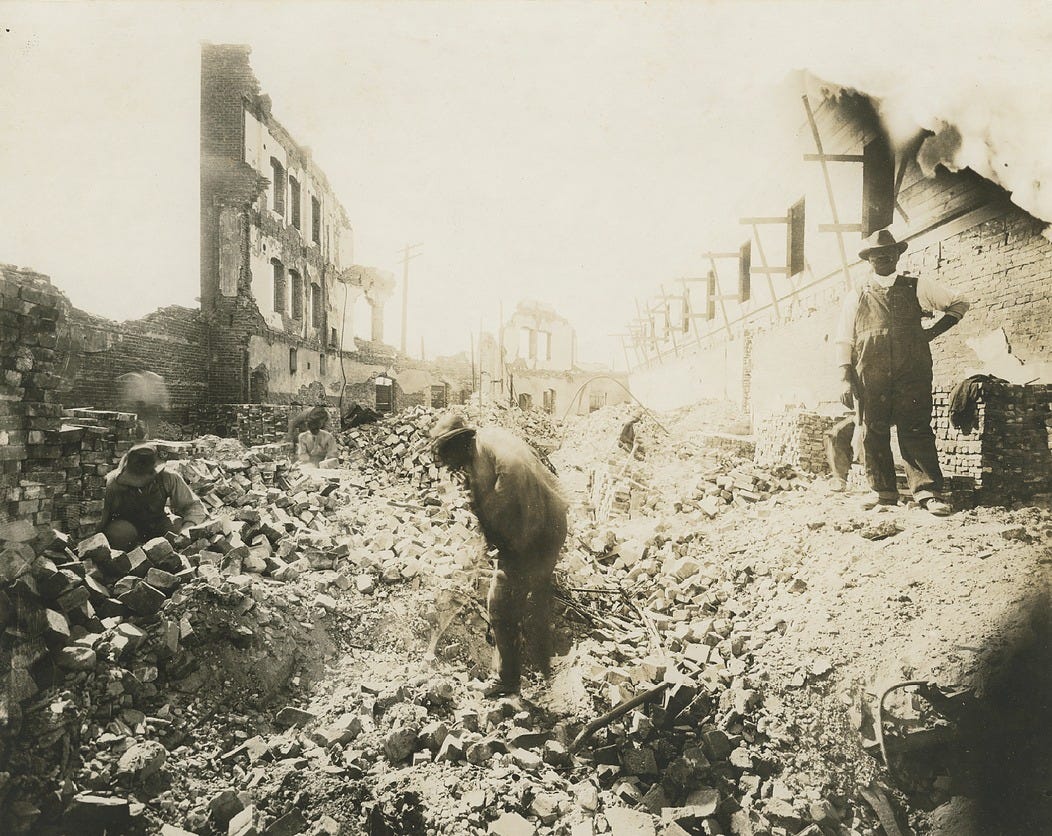
The first was the Greenwood Rising museum, which is dedicated to remembering both the terror of the 1921 Tulsa Race Massacre and the determination of the city’s Black residents to keep building a strong community there. The Tulsa Race Massacre is widely regarded as the single worst incident of racial violence in American history: over two days, White supremacists killed more than 300 Black people and destroyed 35 city blocks. The power of this museum, the way it told its story, was incredibly moving.
The second museum we went to was the Bob Dylan museum. Dylan wanted his collection of personal papers to be housed in a museum next door to the Woody Guthrie museum in Tulsa, and having the two of them together there was really fun. For any Dylan fan (which I definitely am), walking around that museum, listening to his songs, watching his classic and often hilarious interviews , seeing the early versions of song lyrics written down on scraps of paper made for an experience that was just super cool.
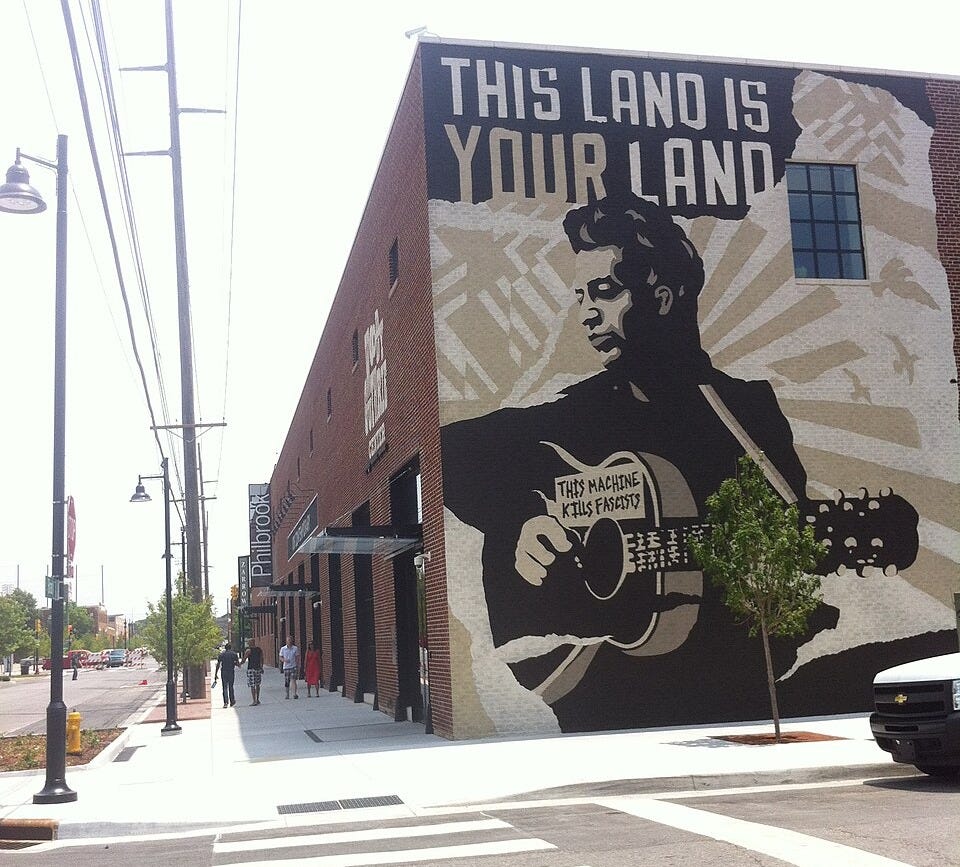
But it was the Woody Guthrie museum that moved me the most. He wrote and performed thousands of songs about the working folks that society had forgotten and thrown away -- about White, Black, and Native peoples who lived in the Oklahoma he grew up in. His lyrics told stories about the Great Depression and the Dust Bowl, and what those calamities did to people. Guthrie sang about the farm workers who were “known by no name except deportee,” about labor unions and the Civil Rights Movement, and about the poor tenant farmers forced to leave to try to rebuild their lives out West.
Guthrie put a sticker on his guitar during World War II, when he served in the Merchant Marines, that said “This machine kills fascists.” He knew that art and culture, songs and books and movies mattered as much in defeating fascist ideas as guns and bombs. And he kept that sticker on after the war, and when people asked him why, he said it was because fascism happened whenever big corporations ran the government and used racism and hate to keep people divided.
The Guthrie museum reminded me that places like Oklahoma used to have great populist, working-class leaders who told the story of working families and fought like hell for them, not just to win elections but to build a movement. The Democratic Party and progressive movement need to reclaim that movement and vision. We need to fight the good fight for all working people.
Thanks for this column. As a Kansas kid, I really appreciate this so much!
thank you Mike— for this hopeful and moving commentary